
Georgia Bench Warrants
Georgia bench warrants are court orders that judges issue when a person does not show up for a scheduled court date. All 159 counties in Georgia handle bench warrant records at the county sheriff's office. No single statewide database is open to the public for searching active warrants across Georgia. You can check for bench warrants by contacting the sheriff's office in the county where the case was filed. A few Georgia counties offer online warrant searches, but most still require a phone call or in-person visit. This guide covers how to find bench warrant records, what to expect during a search, and the laws that apply across Georgia.
Georgia Bench Warrant Quick Facts
How Georgia Bench Warrants Work
A bench warrant is a court order that tells law enforcement to arrest someone. The name comes from the judge's bench in a courtroom. In Georgia, judges issue bench warrants under O.C.G.A. § 17-7-90 when a person has been accused by a grand jury or has failed to appear after getting proper notice. The notice can come three ways. The judge told the person in open court. The clerk mailed a written notice. Someone served the person in person. Once the judge signs the bench warrant, law enforcement must find and arrest that person. Anyone picked up on a bench warrant in Georgia stays in jail until they post bail or see a judge.
The full text of the Georgia bench warrant statute is available at O.C.G.A. § 17-7-90 on Justia.
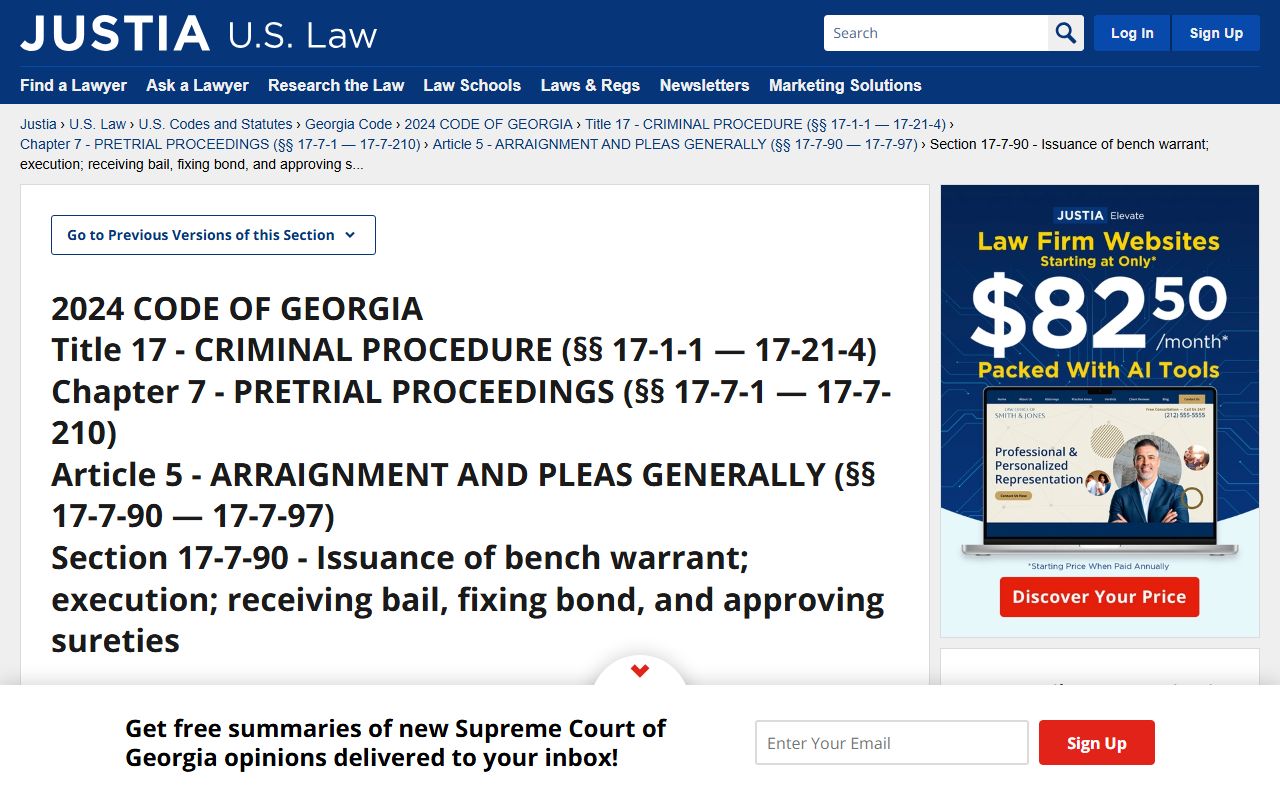
This statute is the main law that gives Georgia courts the power to issue bench warrants for failure to appear.
Bench warrants in Georgia do not expire. A warrant from five or ten years ago can still lead to an arrest at a traffic stop. Law enforcement across the state can see active bench warrants through the Georgia Crime Information Center database. Warrants are also placed in the National Crime Information Center, which means police in other states can find them too. Courts in Georgia may recall a bench warrant if the person turns themselves in and takes care of the case. Some courts let an attorney file a motion to lift the warrant. Until that happens, the bench warrant stays active and can be served at any time.
Georgia law also requires a notice period for certain bench warrants. Under O.C.G.A. § 17-6-11, the clerk of court must send a failure to appear letter by mail before issuing a bench warrant in traffic cases. The person gets 30 days to deal with the charges or enter a plea. If nothing happens after that period, the clerk notifies the Georgia Department of Driver Services within five days to start the license suspension process.
Search for Bench Warrants in Georgia
The Georgia.gov warrant search guide lays out the steps for finding an active warrant. You start by gathering basic details about the person. You need their first name, last name, and date of birth. You also need to know what county the warrant might be in. Sheriff's offices only keep records for warrants in their own county, so the county matters. Most sheriff's offices in Georgia let people ask about warrant information for themselves. Some also share warrant info about other people. Payment is not required when you get bench warrant details straight from the sheriff's office.
The Georgia.gov website at georgia.gov/search-existing-warrant provides a step-by-step guide for searching warrants.
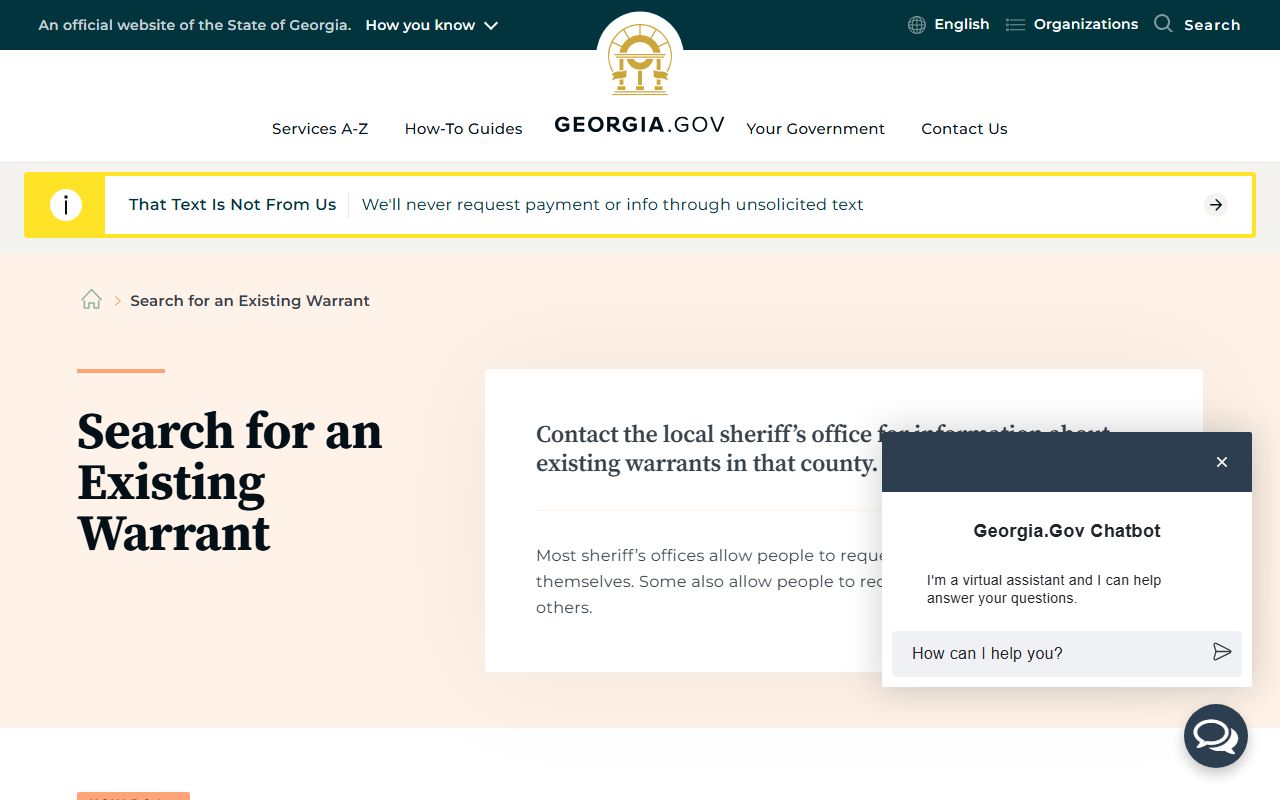
The state guide warns that going in person to ask about warrants carries a serious risk if you have an active bench warrant against you.
Some sheriff's offices in Georgia give warrant information over the phone. Others require an in-person visit. If you go in person, bring a valid government-issued photo ID. The visit may be at the sheriff's office, the county jail, or the courthouse. Here is the key warning from the state: if you appear in person and you have an active bench warrant, you may be taken into custody right away. That is not a small risk. Many people hire a lawyer to check on their bench warrant status in Georgia to avoid that situation.
To search for a bench warrant in Georgia, you typically need:
- Full legal name of the person
- Date of birth
- The county where the warrant was issued
- Government-issued photo ID for in-person visits
The Georgia Sheriffs' Association directory at georgiasheriffs.org lists every county sheriff with phone numbers and addresses.
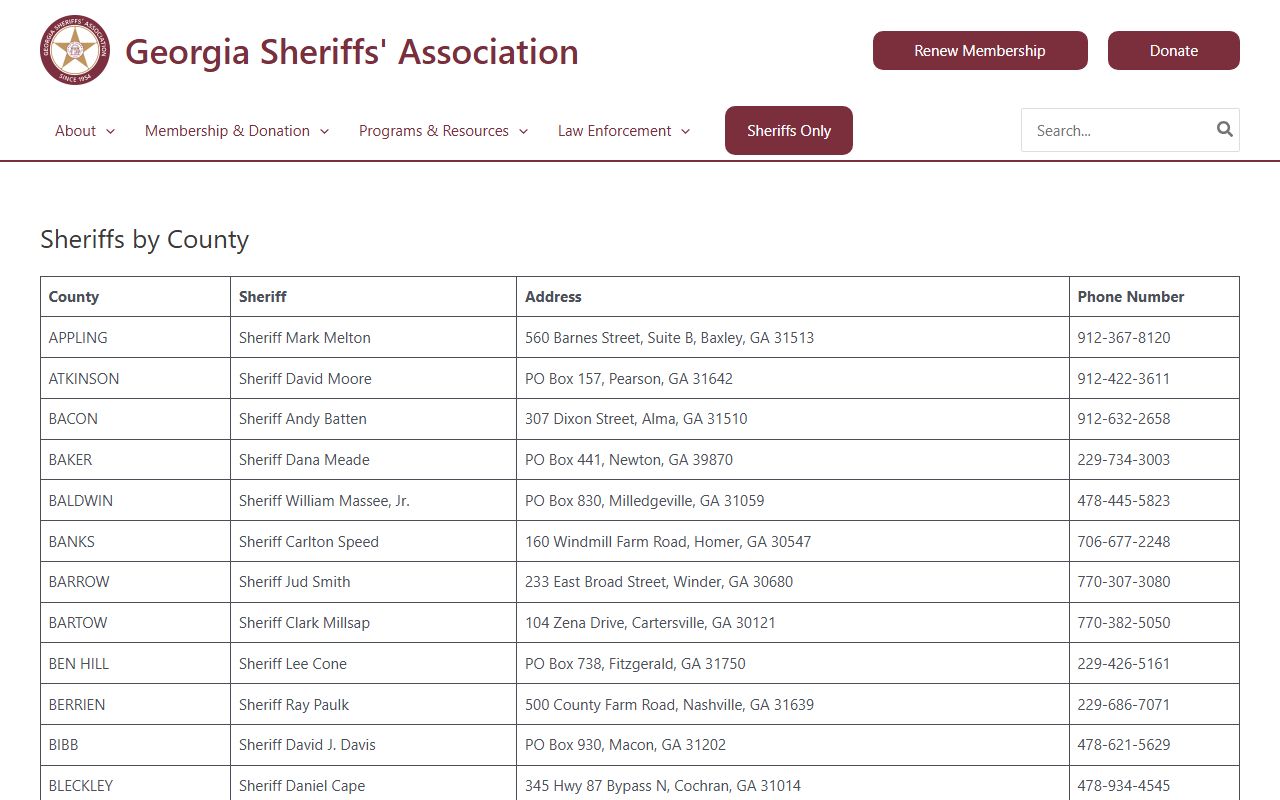
Use this directory to find the right sheriff's office for a bench warrant search in any Georgia county. DeKalb County is one of the few that offers an online active warrant search. That database updates every night at 1:00 a.m.
Note: Payment is not required when getting bench warrant information directly from a county sheriff's office in Georgia.
Georgia Warrant Agencies and Databases
The Georgia Bureau of Investigation is the state's independent agency for criminal justice support. The GBI handles criminal investigations, forensic lab services, and computerized criminal justice information across Georgia. It runs the Georgia Crime Information Center, which stores warrant data and criminal history records for every county. Law enforcement officers use the GCIC database to verify active bench warrants during traffic stops, arrests, and other encounters. The public cannot search GCIC. Only law enforcement, courts, and authorized agencies have access to this system. The GBI tip line at 1-800-597-8477 lets you report information about fugitives or cases.
The GBI website at gbi.georgia.gov has details about the agency's role in Georgia's criminal justice system.
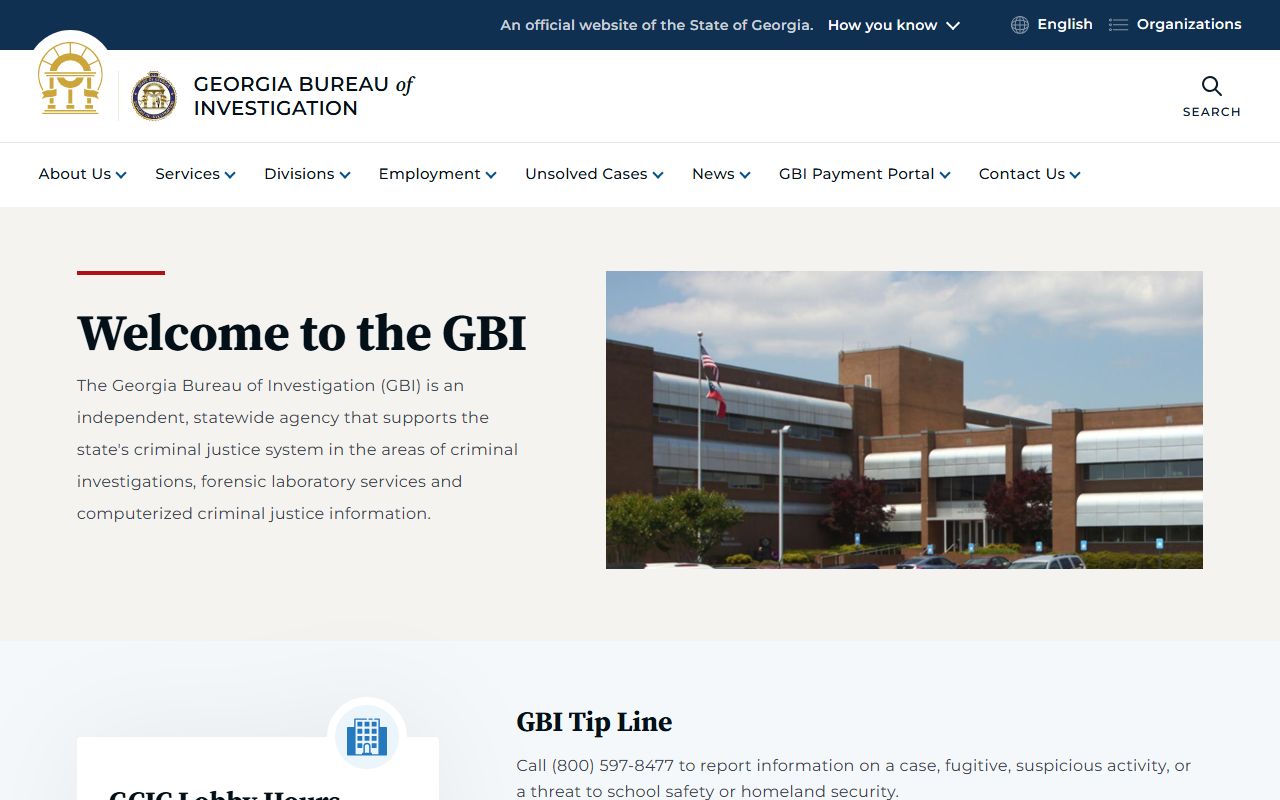
The GBI main office is at 3121 Panthersville Road in Decatur, GA 30034. Call (404) 244-2600 for general inquiries.
The Georgia Crime Information Center processes warrant entries into both the state GCIC database and the national NCIC database. When a Georgia judge signs a bench warrant, the local sheriff's office sends the warrant data to GCIC. The center records it, checks the criminal history of the suspect, and places the person as wanted in both systems. That is how a bench warrant from a small rural Georgia county shows up during a police stop in California or New York. The GCIC lobby office in Decatur is open by appointment only. Call 404-244-2639 to set up a time for record inspections or fingerprint services.
The GCIC page at gbi.georgia.gov explains the center's role in processing Georgia's bench warrant records.
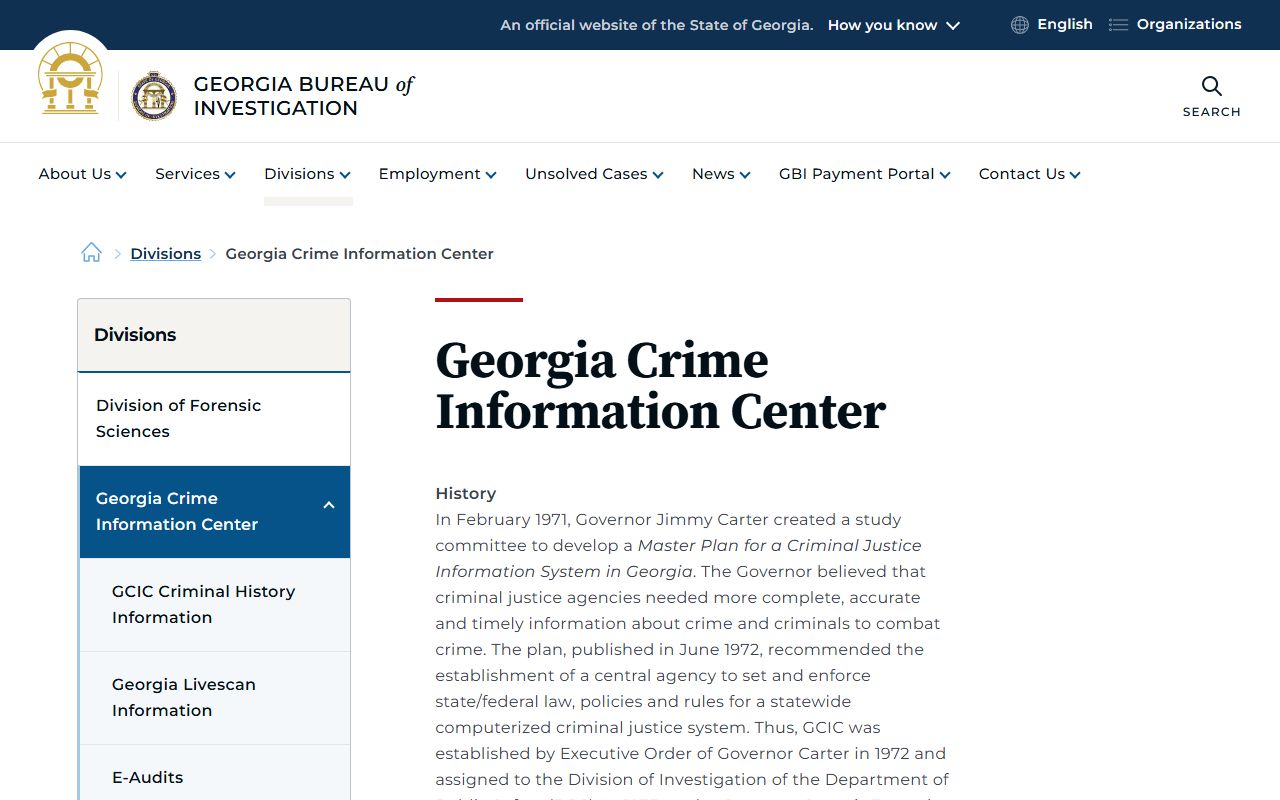
GCIC also runs the Protective Order Registry and the Sex Offender Registry for the state. The Georgia Courts sheriffs directory is another resource for finding the right office for a bench warrant inquiry.
Bench Warrant Penalties in Georgia
Failing to appear in court in Georgia carries serious penalties on top of the original charge. O.C.G.A. § 16-10-51 treats failure to appear as bail jumping. For misdemeanor cases, bail jumping can bring up to 12 months in jail and fines up to $1,000. For felony cases, penalties climb to one to five years in prison and fines up to $5,000. If a person leaves Georgia to avoid a misdemeanor court date, the offense gets upgraded to a felony. All of these penalties stack on top of what the person was first charged with. A bench warrant in Georgia makes the whole legal situation far worse than just showing up would have been.
Traffic cases have their own set of consequences. O.C.G.A. § 40-13-63 makes willful failure to appear on a traffic citation a separate crime punishable by up to $200 in fines or three days in jail. Under O.C.G.A. § 40-13-58, if you posted a cash bond and then did not show up, the court treats it as an automatic guilty plea. Your bond money goes toward the fine. The court may still issue a bench warrant even after applying the bond.
The Georgia Department of Driver Services handles license suspensions that come from bench warrants for traffic violations.
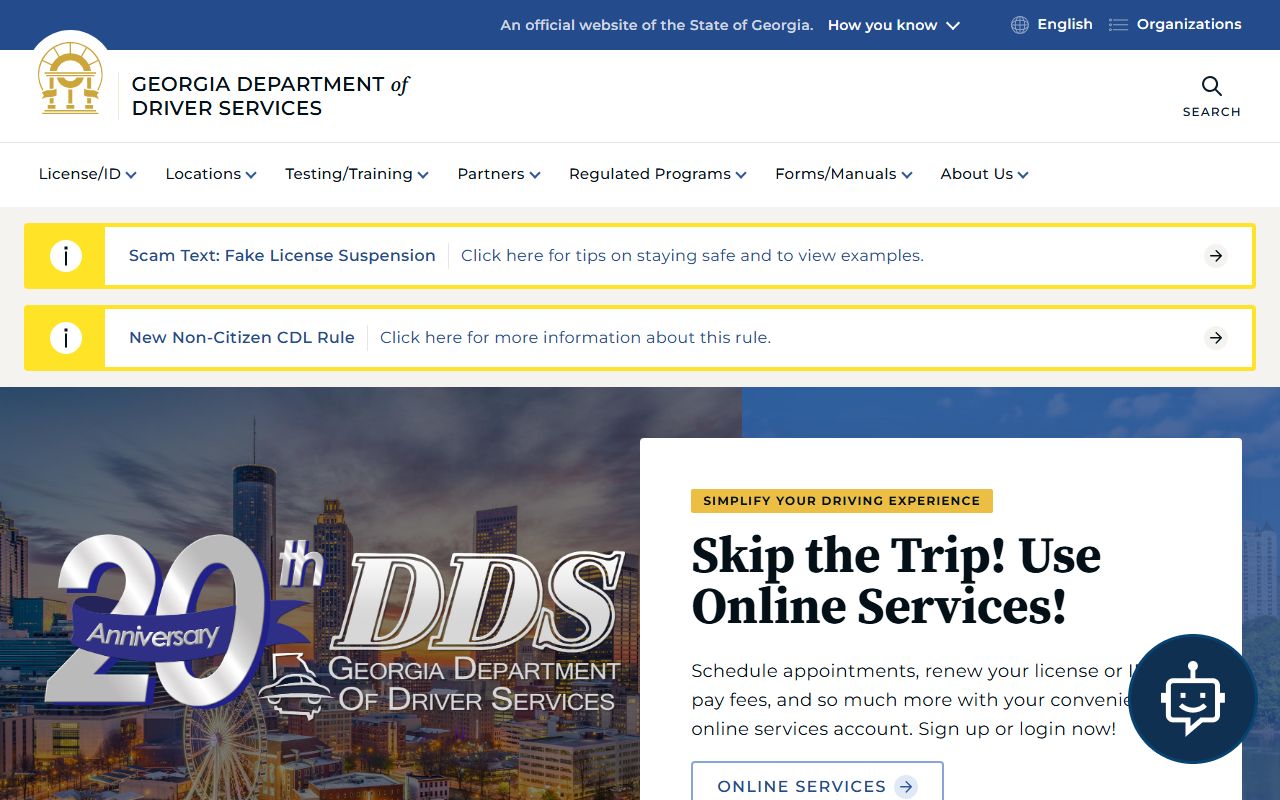
Under O.C.G.A. § 40-5-56, a failure to appear on a traffic case triggers an automatic license suspension. The DDS sends notice by certified mail. The suspension stays in place until the person resolves the citation and pays all fines. Getting the license back costs $100 in reinstatement fees, or $25 if done by mail.
Note: Driving on a suspended license from a bench warrant is a separate criminal offense in Georgia.
Georgia Bench Warrant Public Access
Warrants in Georgia are public records. The Georgia Open Records Act, O.C.G.A. § 50-18-70, gives the public the right to get and copy records held by government agencies. Bench warrant records are accessible once they have been issued and executed. Before a warrant is served, the information may be held back since releasing it could tip off the person being sought. After execution, the records become available through the issuing court or sheriff's office. No statewide portal exists for the public to search bench warrant records online. Each of Georgia's 159 counties manages its own warrant files at the local level.
The Georgia Sheriffs' Association at georgiasheriffs.org connects you with all 159 county sheriff's offices that keep bench warrant records.

The association's main office is at 1000 Sheriffs Way in Madison, GA 30650. Call 770-914-1076 if you need help finding the right county sheriff for a bench warrant search.
Fulton County alone processes more than 21,000 criminal warrants each year. The Fulton County warrant search page explains that warrant status information is only given in person at the courthouse or jail. You must show a government-issued photo ID. Warrant info is provided only to the person named on the warrant. That policy is common across many large Georgia counties. In smaller counties, sheriffs may be more willing to share bench warrant details over the phone.
The Georgia Courts sheriffs directory is a state-run list of all county sheriff offices and their contact info.
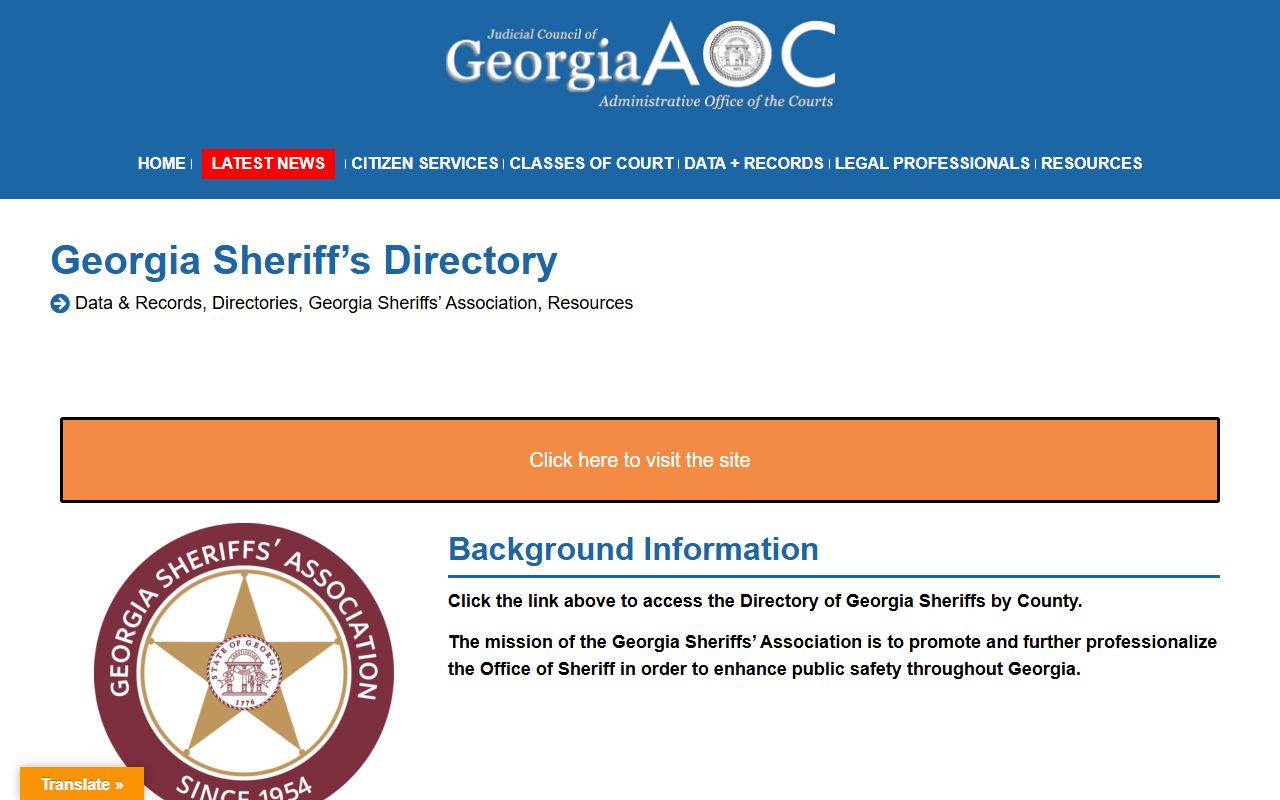
Use this directory or the Sheriffs' Association list to contact the county where a bench warrant may have been issued.
Browse Georgia Bench Warrants by County
Each county in Georgia has a sheriff's office that handles bench warrant records. Pick a county below to find local contact info and resources for bench warrant searches in that area.
Bench Warrants in Major Georgia Cities
City residents search for bench warrants through their county sheriff's office. Pick a city below to learn about bench warrant records and local resources in that area.